
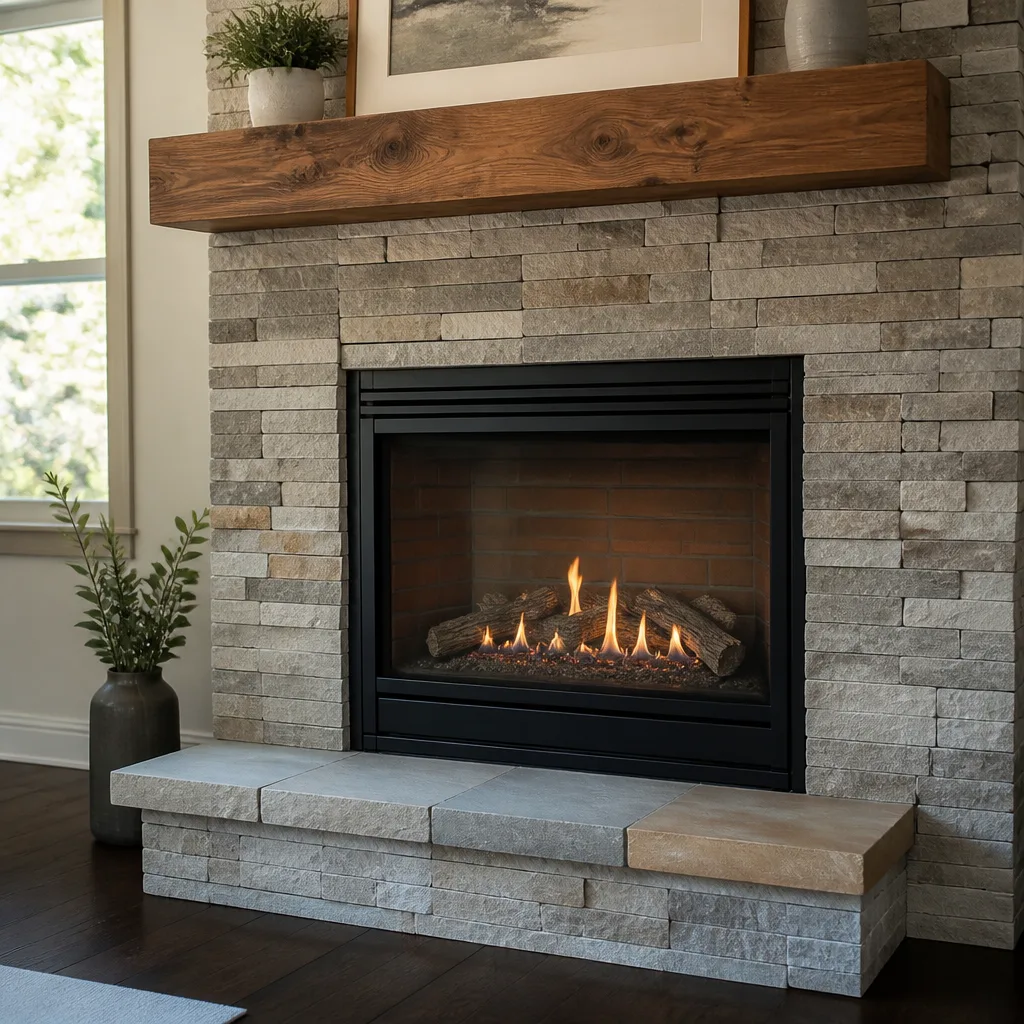
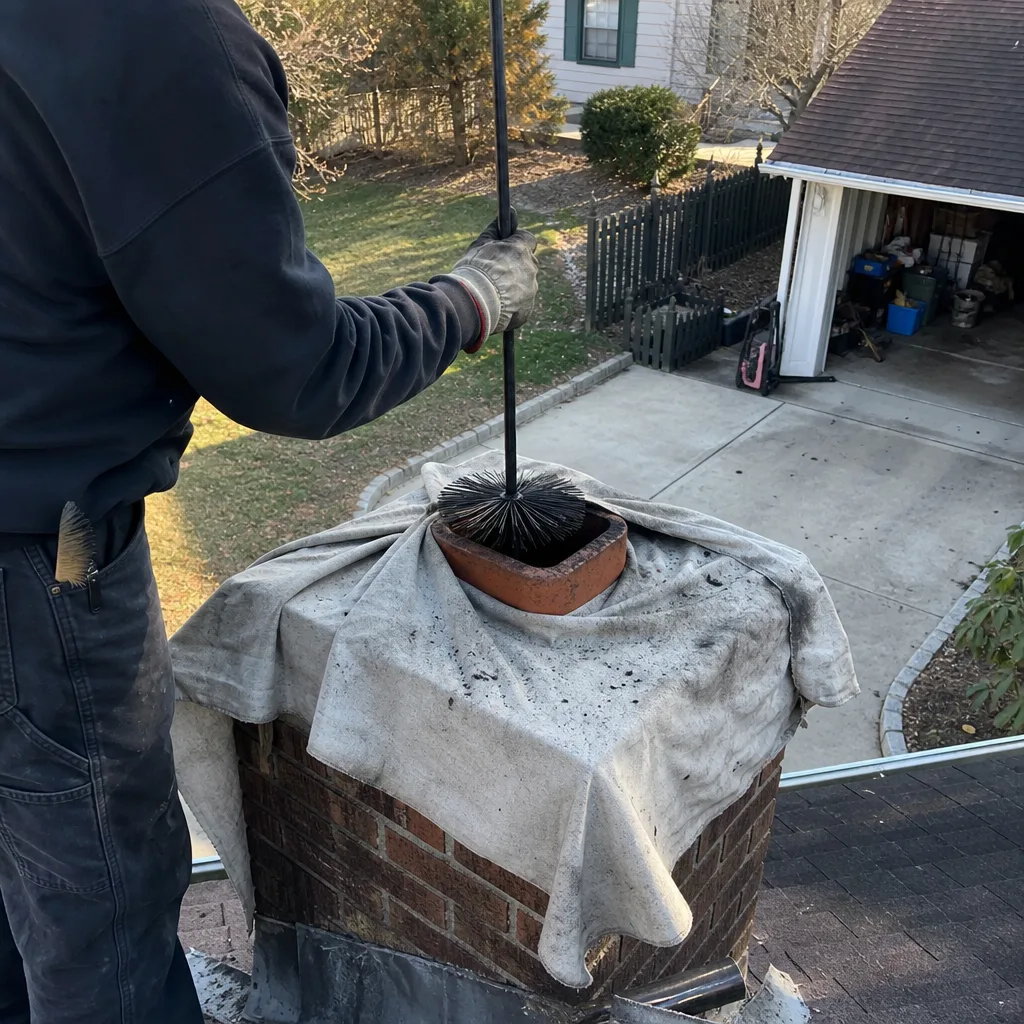
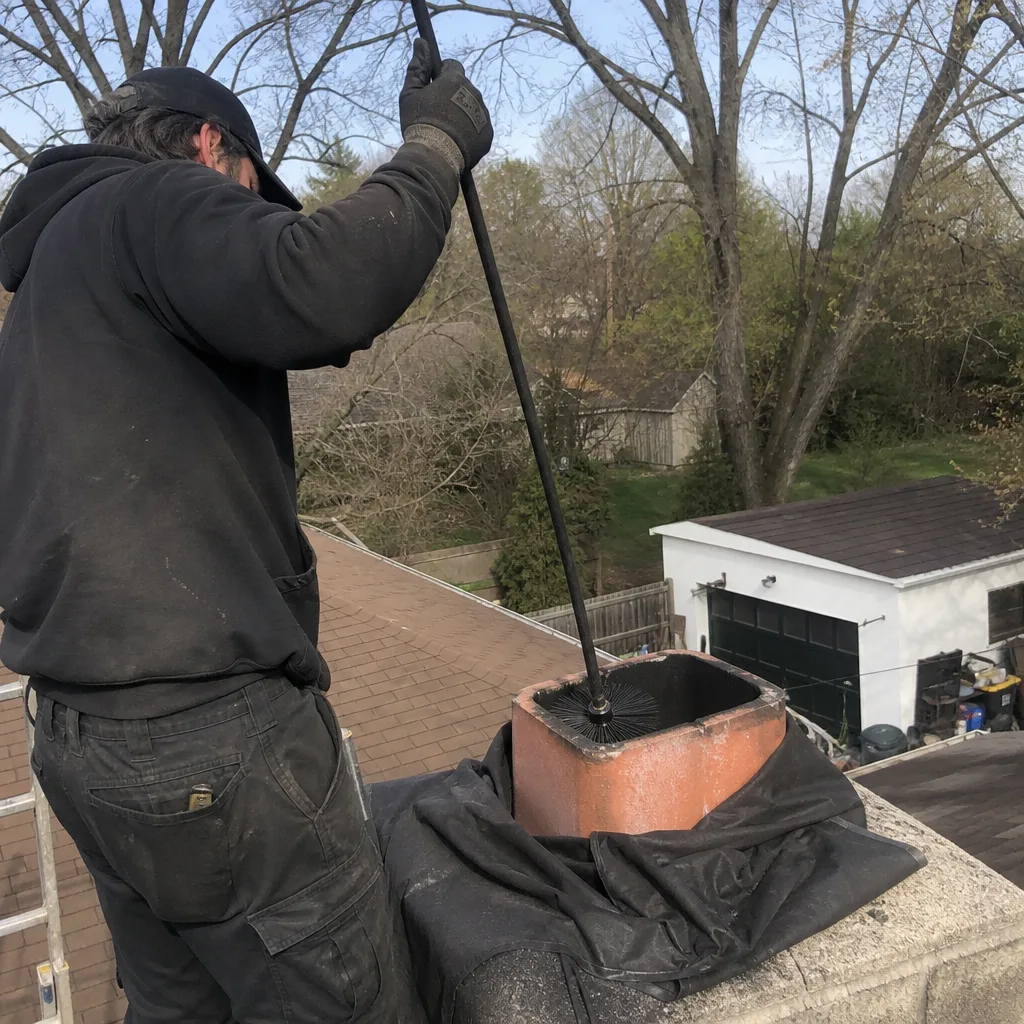
Level 1 sweep and inspection to the NFPA 211 annual standard - flue, crown, cap, and flashing checked and photographed
Chimney sweep logs do not sweep chimneys. They loosen some creosote - which then falls where a brush and vacuum still have to collect it.
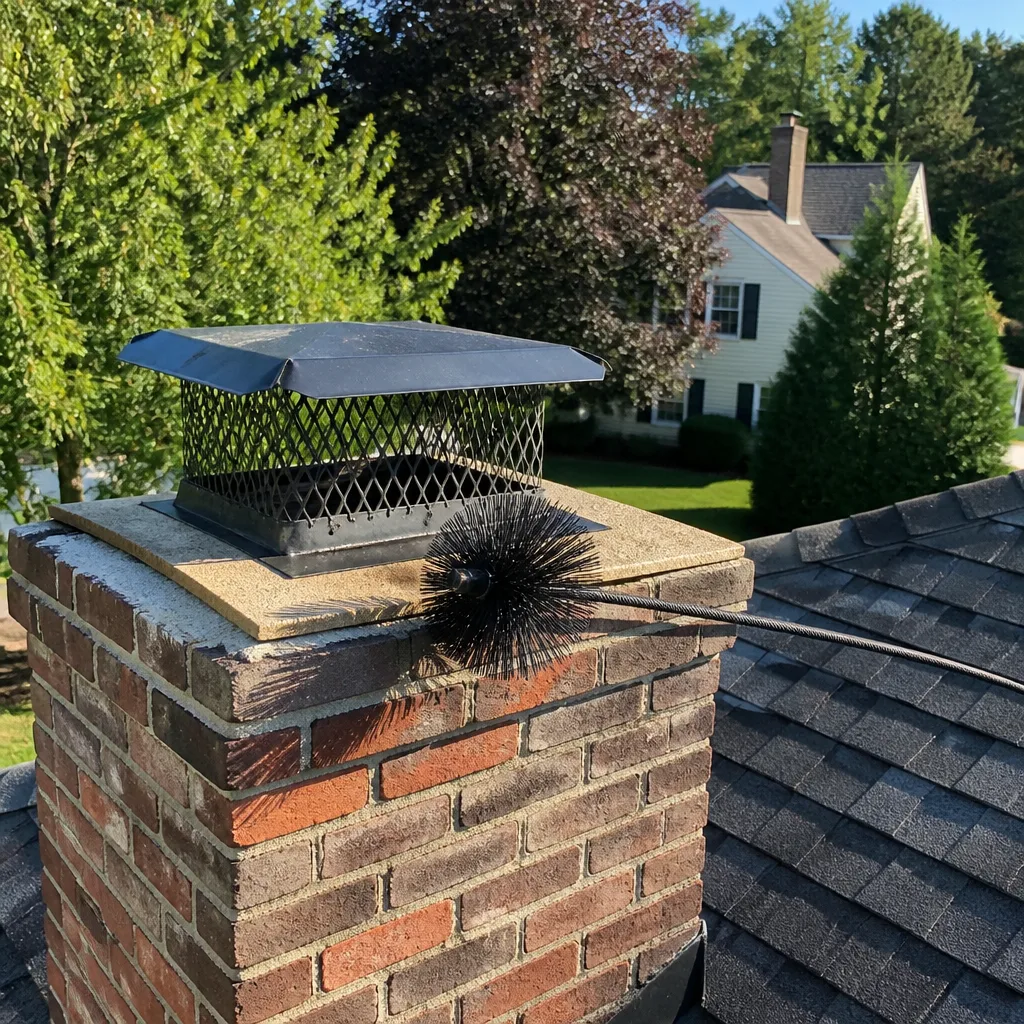
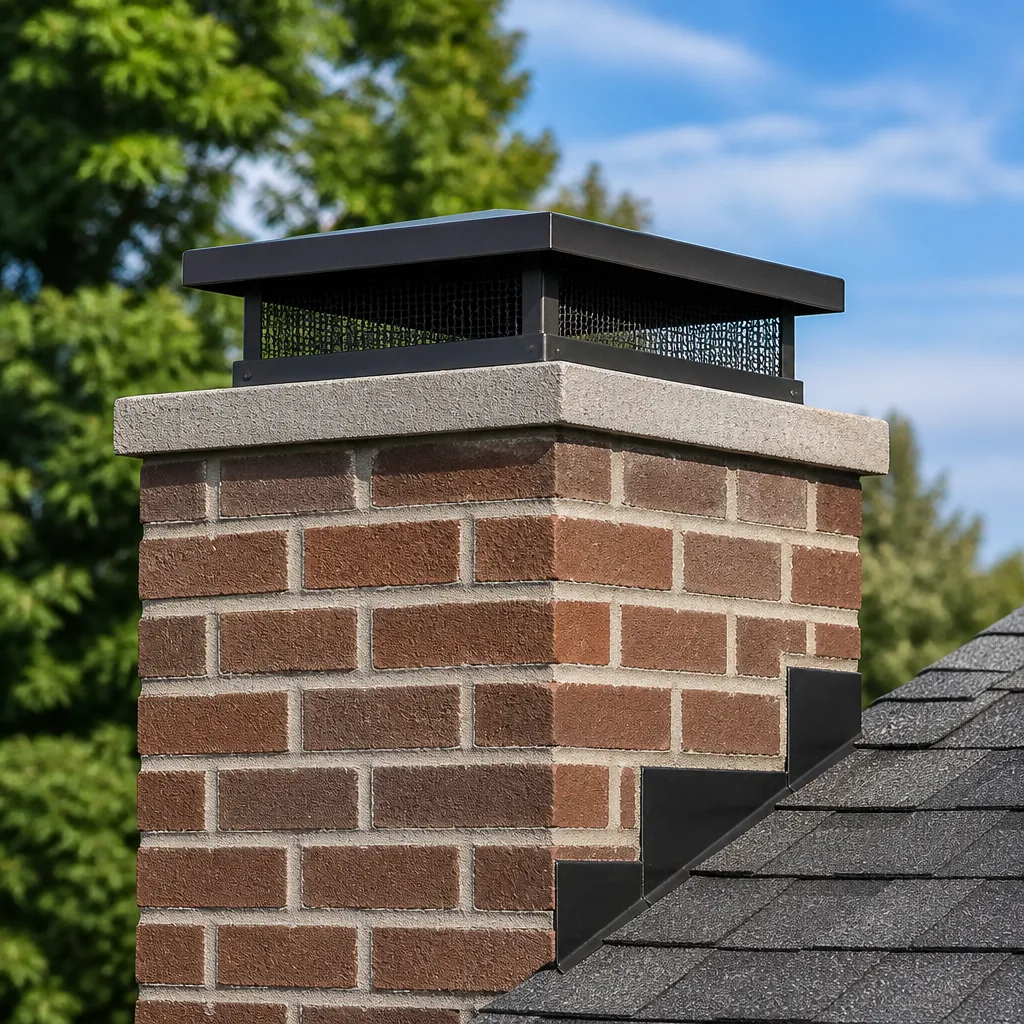
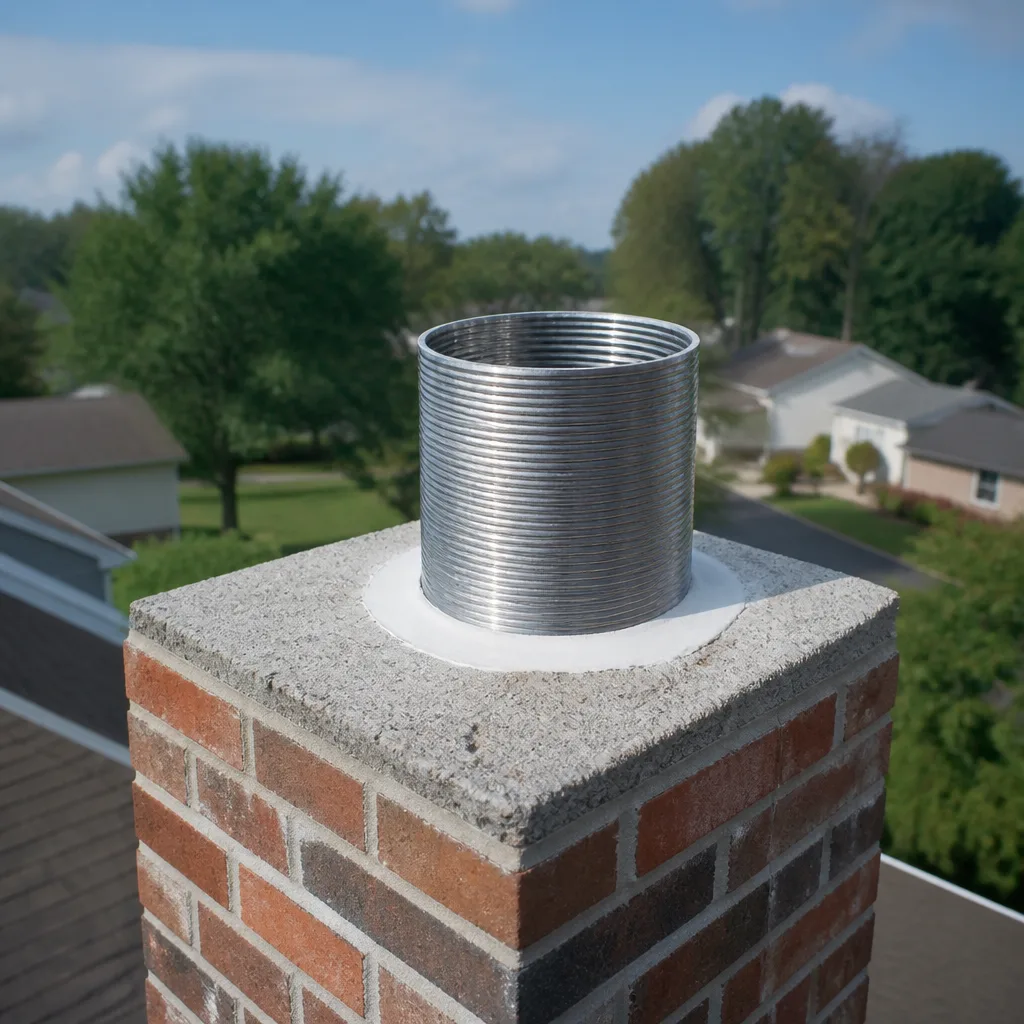
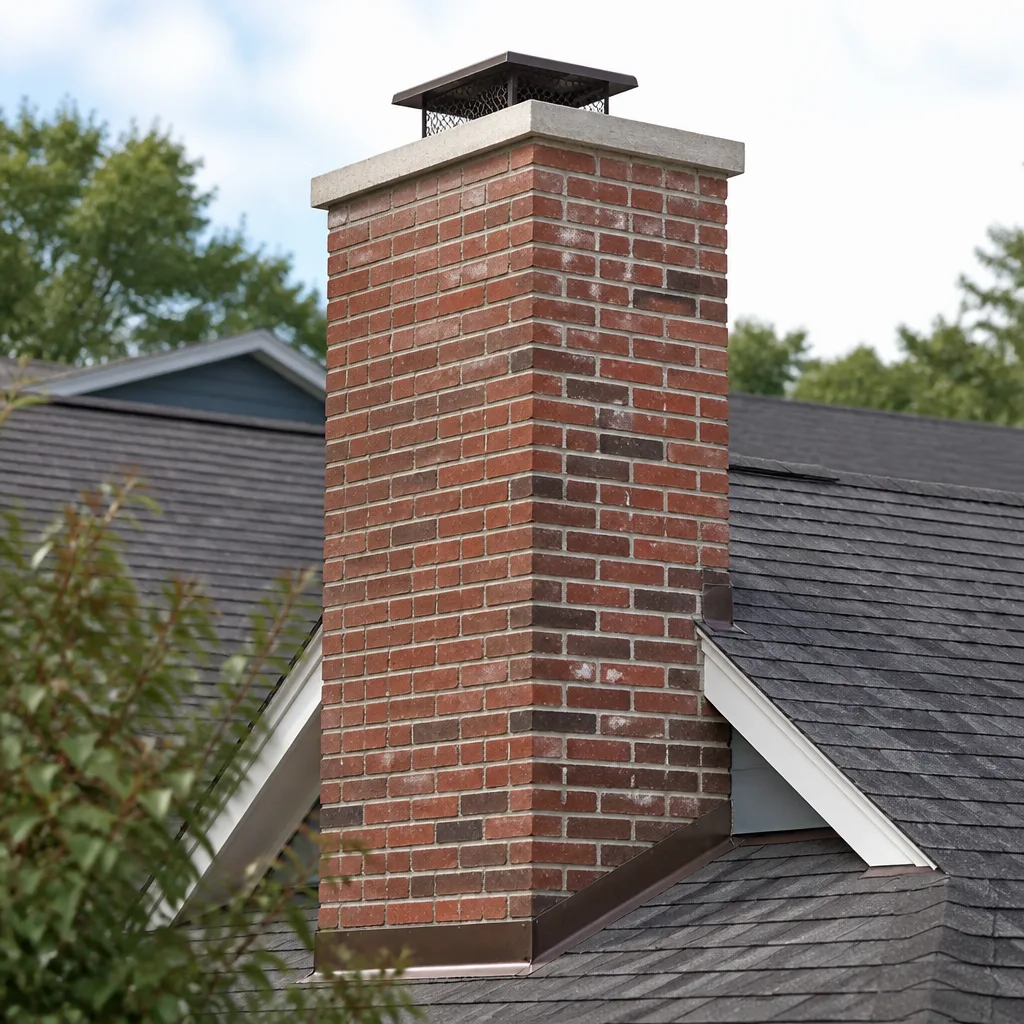
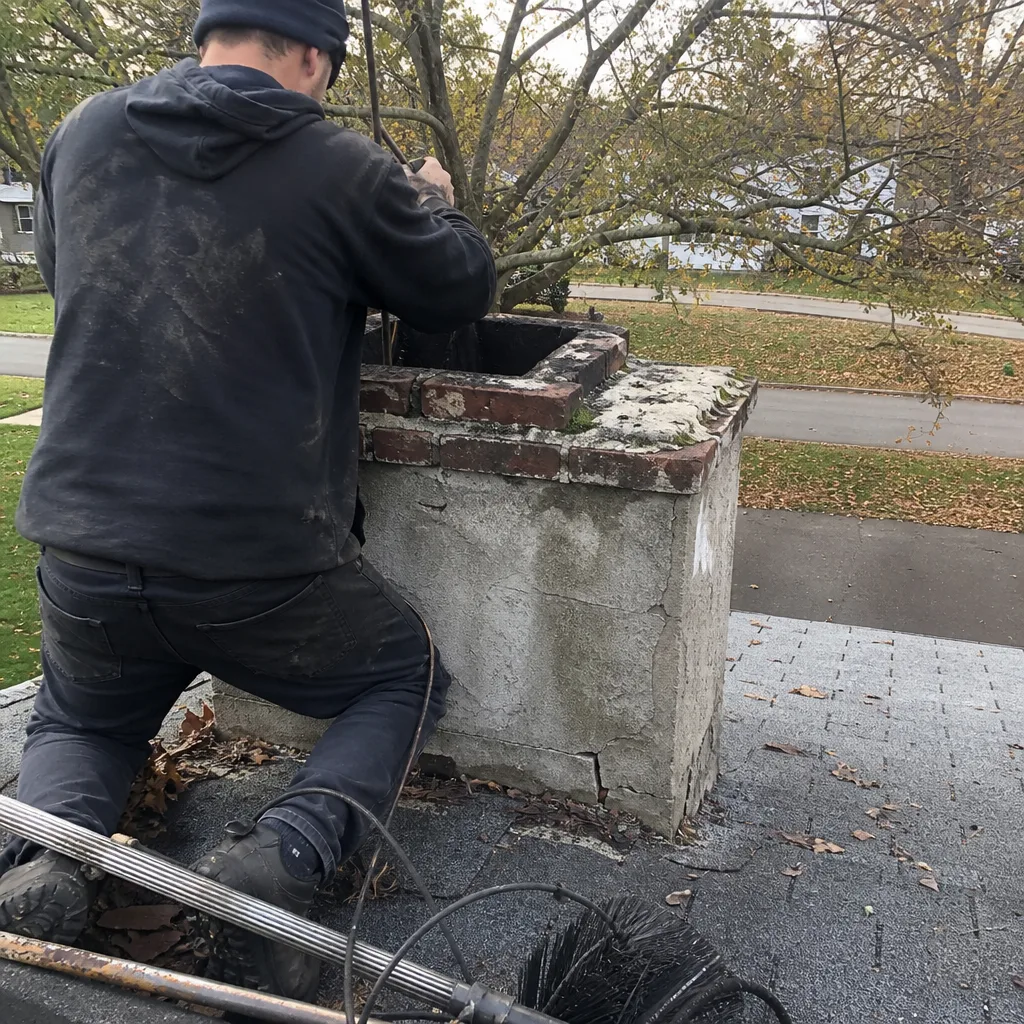 Before
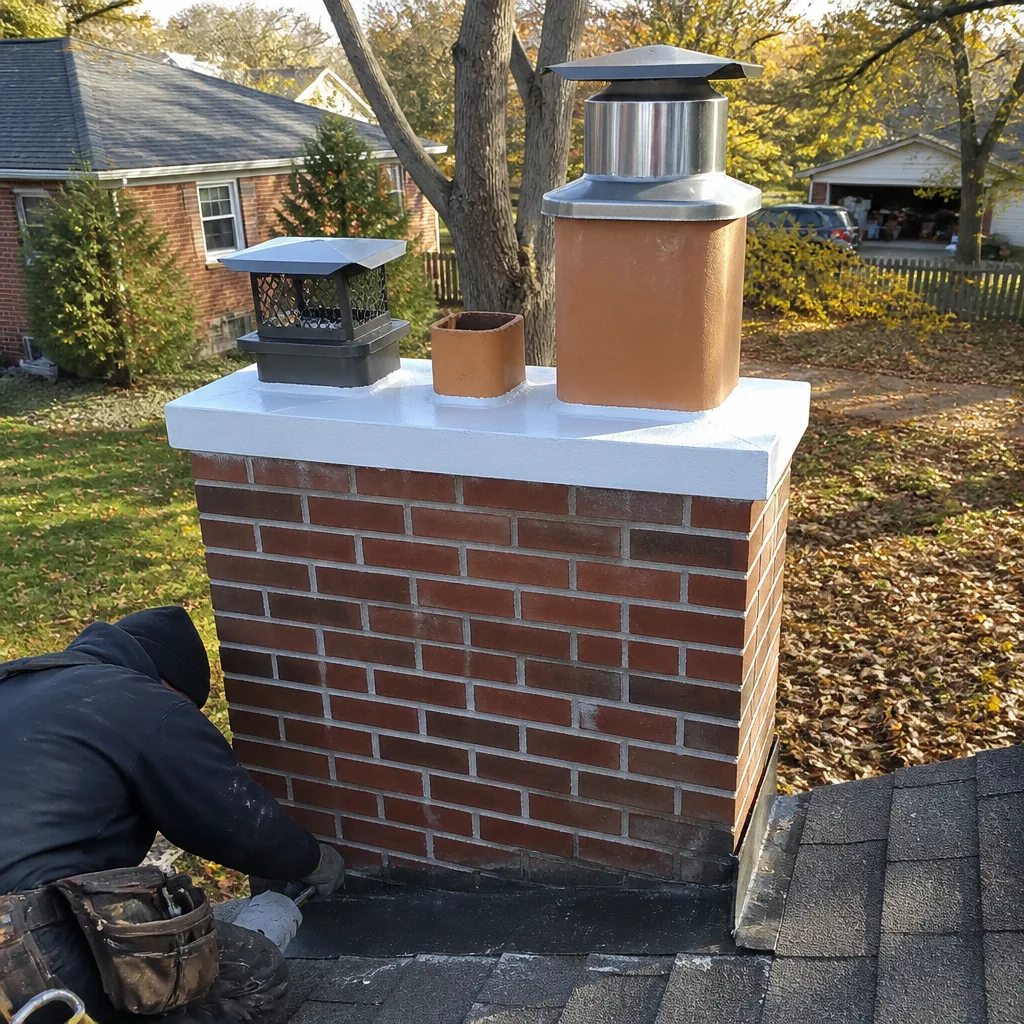 After
After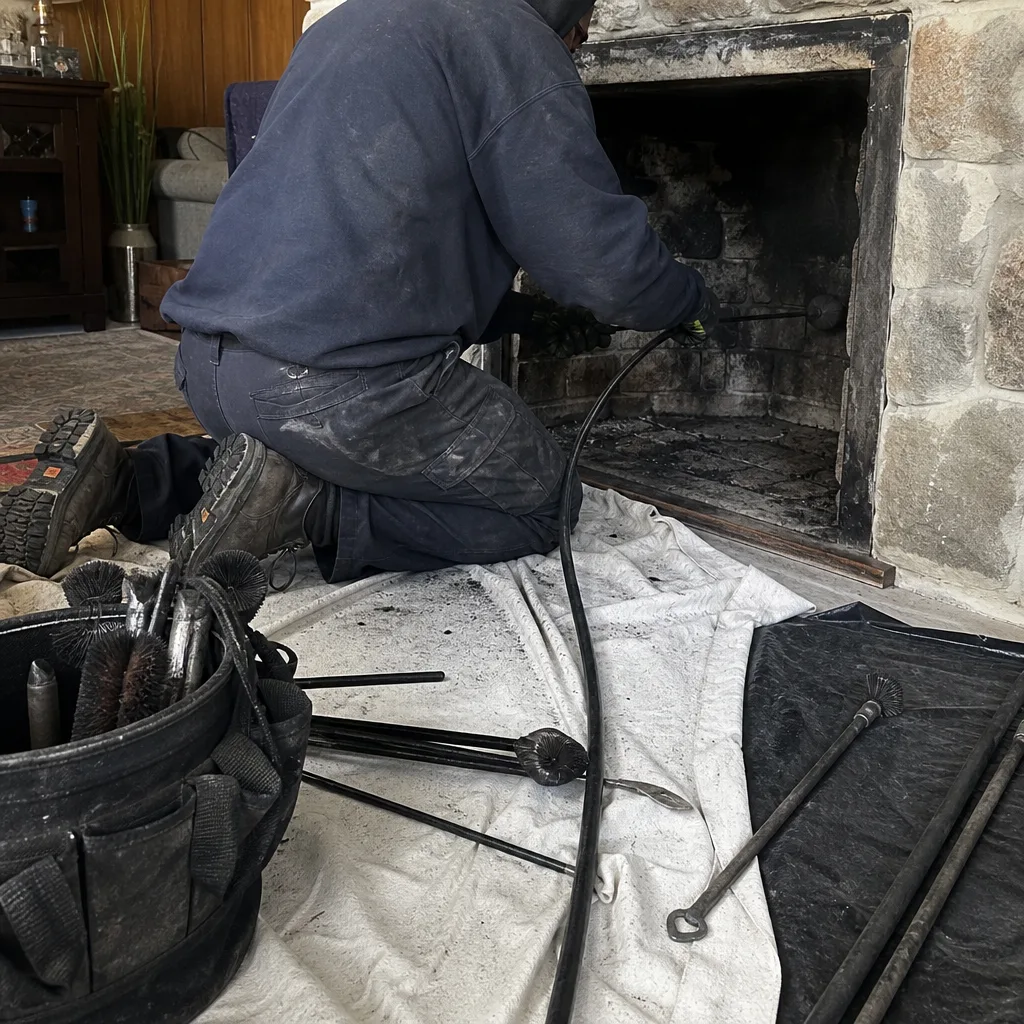 Before
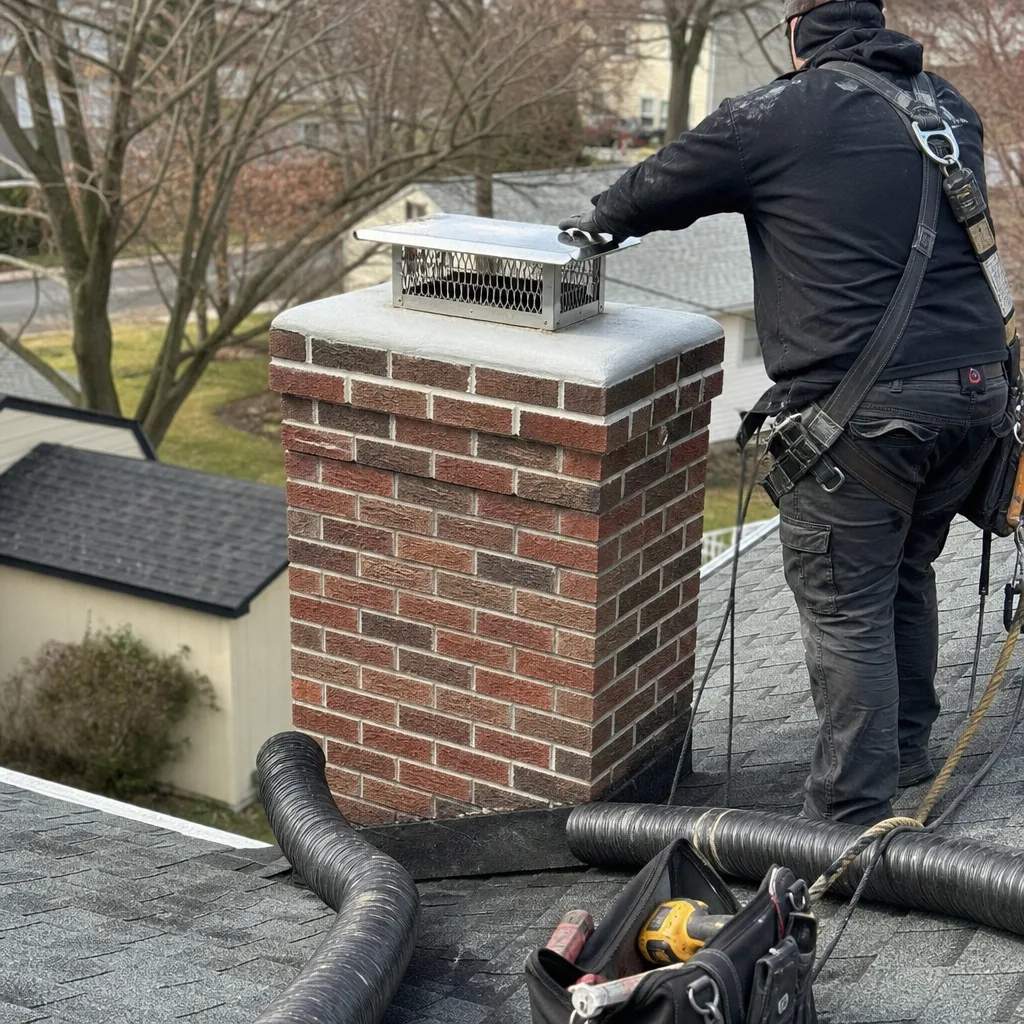 After
After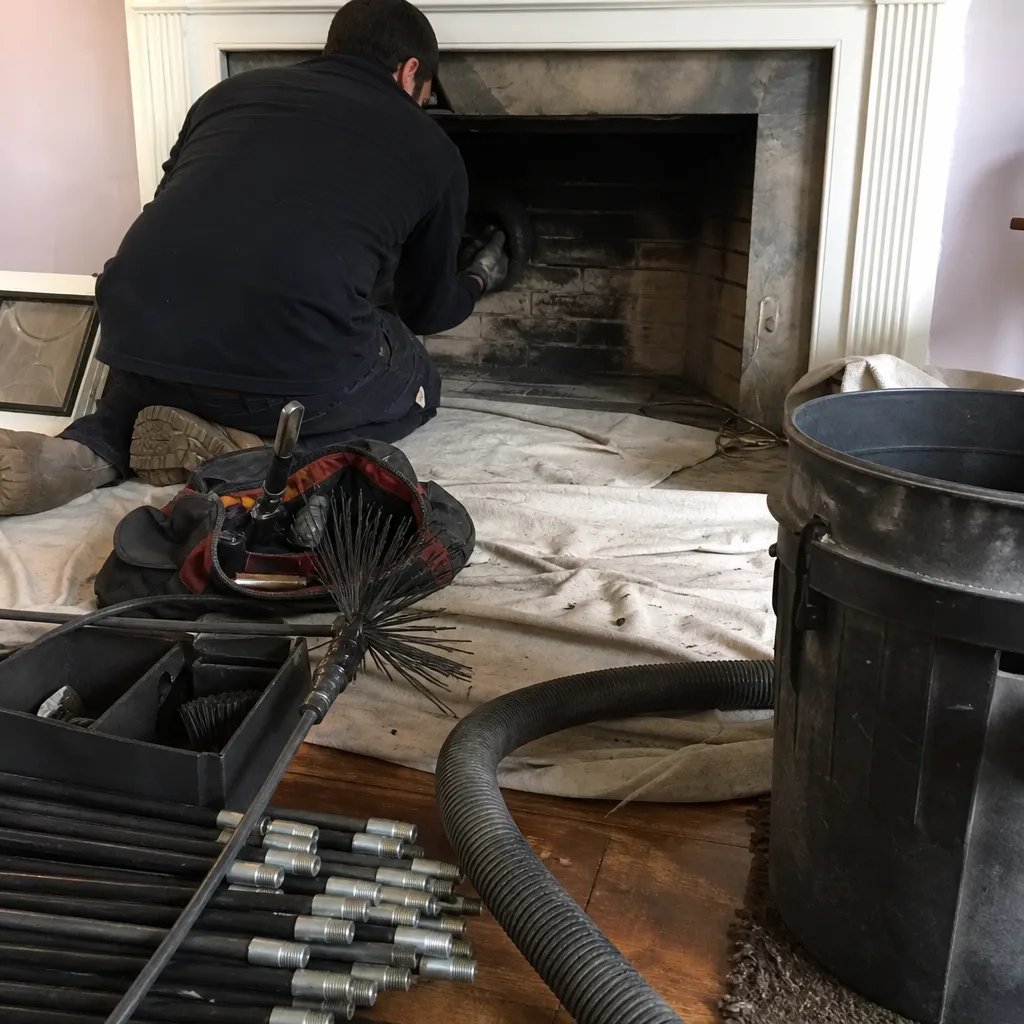 Before
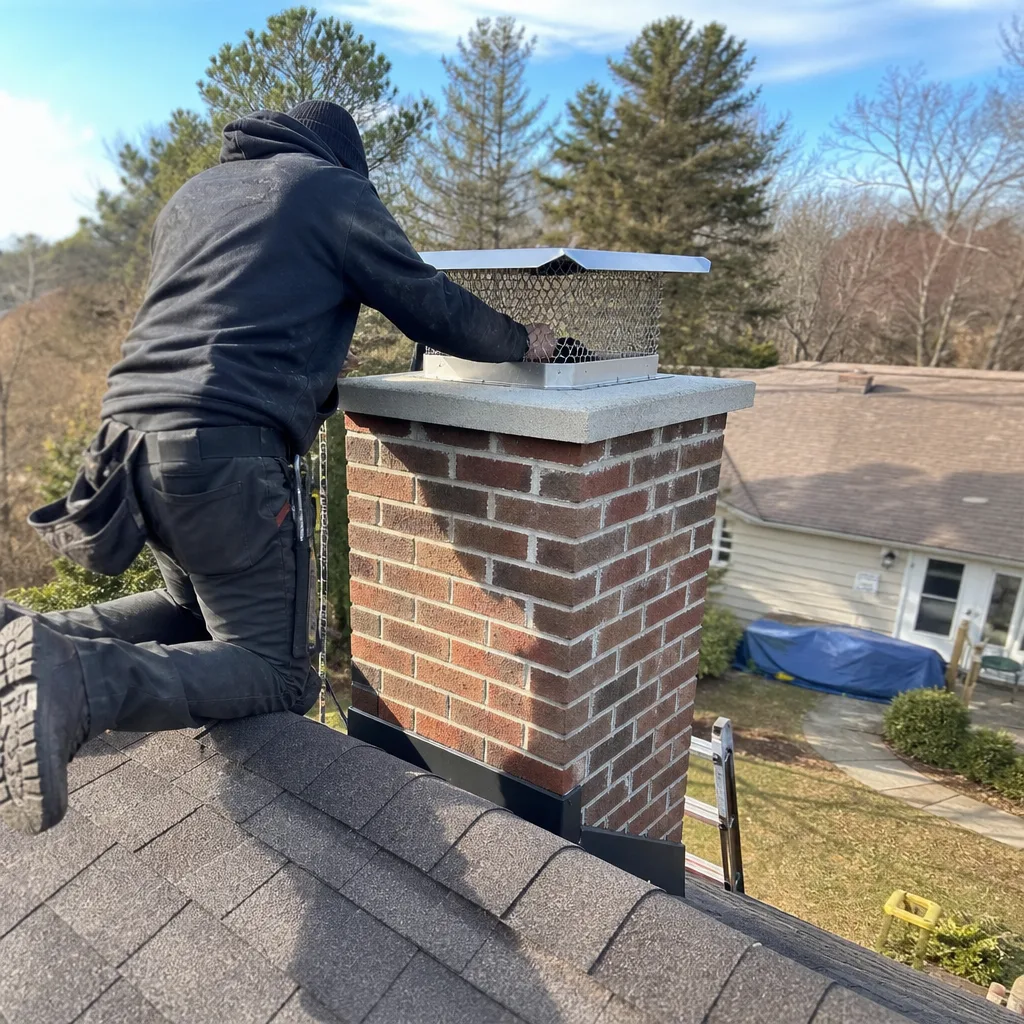 After
AfterMortar Repointing in Wilmington, DE
Mortar repointing is the process of removing deteriorated mortar from the joints between chimney bricks and packing in fresh, properly mixed mortar to restore a watertight, structurally sound bond. In Wilmington, most chimneys built before 1990 need repointing by the time they hit 20 to 30 years of service – accelerated by the freeze-thaw cycles we see every winter along the Brandywine corridor. At Level Two Chimney Wilmington, every repointing job starts with a camera-scan inspection so we know exactly which joints are failing, how deep the damage runs, and what How Much Does Chimney Repair Cost? (2026 Price Guide) - Wilmington, DE says to expect before anyone picks up a chisel.
If you’ve noticed crumbling mortar, white mineral staining on your brick face, or moisture showing up near your fireplace, those are signals worth taking seriously. Call us at (610) 546-5053 – a live person picks up, 24 hours a day, seven days a week – and we’ll schedule the inspection that gives you a written price, written scope, and written warranty before any work starts. That’s not a sales pitch; it’s Clause 1 of the Haven Standard, and it’s applied to every job we do, including mortar repointing.
This page sits under our Chimney Repair in Wilmington service, which covers the full range of masonry and structural work we do across the city. Mortar repointing is one of the most requested repairs we handle, and it’s also one of the most misunderstood – so the sections below walk through what we look for, how we work, and what it costs in the current Wilmington market.
When You Need Mortar Repointing
Repointing isn’t a cosmetic upgrade. The mortar joints in a chimney are the primary barrier keeping water out of the masonry core. When those joints erode, water penetrates, freezes, expands, and forces bricks apart – turning a $600 repointing job into a $4,000 our Chimney Repair services partial rebuild if it’s left long enough. Here’s what tends to show up in Wilmington homes before homeowners call us:
- Visible joint erosion of 3/8 inch or more. This is the threshold at which mortar no longer sheds water reliably. On older Brandywine-area colonials, we frequently see joints recessed a full half-inch, especially on the north and west faces of the chimney that catch prevailing weather.
- Efflorescence (white chalky staining) on the brick face. That white residue is dissolved mineral salts being carried to the surface by water moving through compromised joints. It’s the chimney telling you moisture has a path inside.
- Soft or crumbling mortar that you can scratch out with a key. Mortar that degrades to that point has lost its compressive strength and is no longer doing structural work. In Trolley Square and Wawaset Park, where we see a lot of early-twentieth-century brick work, this pattern is common in chimneys that haven’t been touched since original construction.
- Interior water stains near the firebox or on the ceiling above the chase. When joints fail high up on the stack – above the roofline where most homeowners never look – water tracks down inside the wythe and appears inside the house, sometimes feet away from the actual entry point.
- Spalling bricks adjacent to failing joints. Spalling means the brick face is flaking or popping off. It happens when water saturates the brick body through open joints and then freezes. Repointing stops the cycle; it doesn’t reverse brick damage already done, so catching it early matters.
- A recent Level 2 camera inspection that flagged joint deterioration. We’ve completed more than 38,000 chimney inspections and cleanings since 2009, and joint deterioration shows up in the camera record before it’s visible from the ground. If your inspection report noted mortar loss, that note comes with photos – and those photos are why we document every visit under Haven Standard Clause 4.
Our Mortar Repointing Process
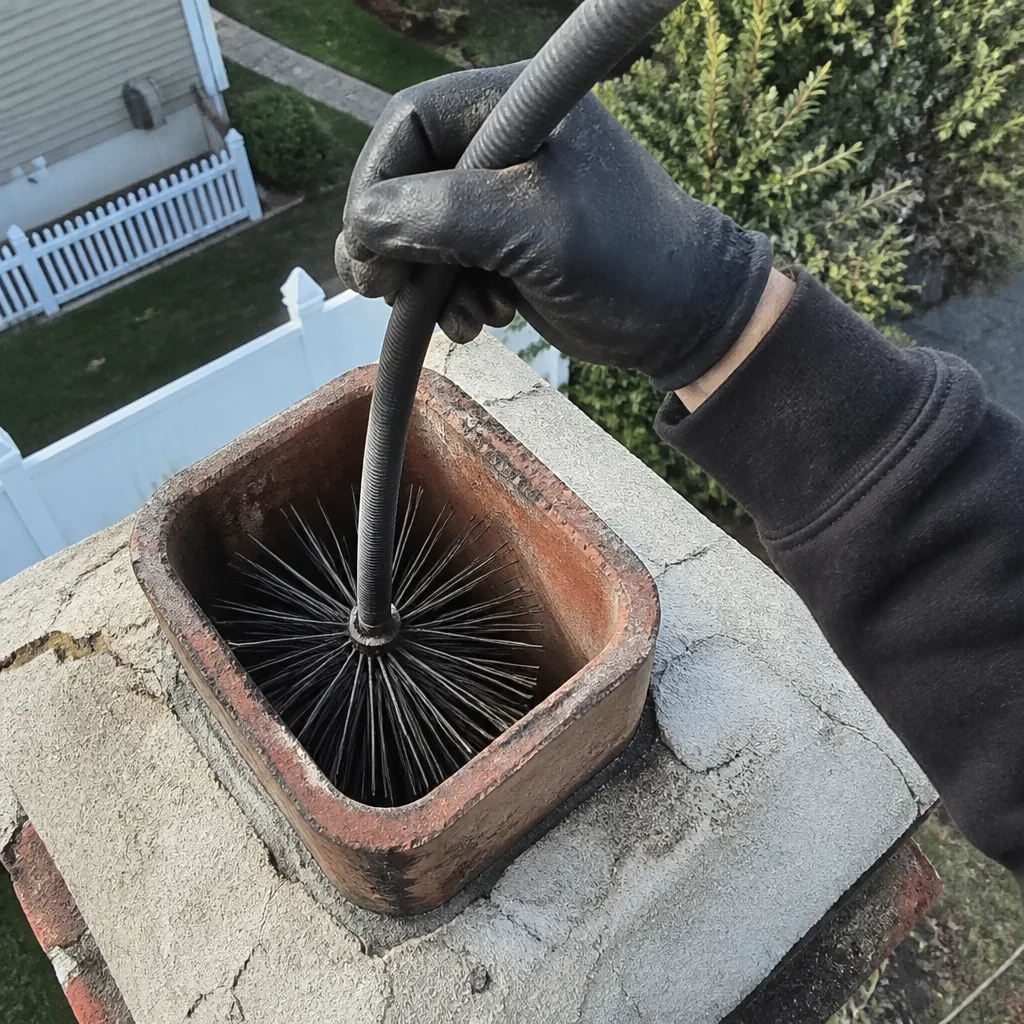
Repointing done right is slow, deliberate work. The mortar has to be removed to the correct depth without damaging the surrounding brick, and the new mortar has to match the original in composition and hardness – or it will either crack out of the joint or, worse, pull the face off an adjacent brick that’s softer than the new mix. Here’s the sequence we follow on every Wilmington repointing job:
- Camera-scan inspection and joint mapping. Before any repair work starts, we run a documented NFPA 211 Level 2 camera inspection. The camera goes down the flue; we also photograph the exterior joints from multiple angles. The result is a written scope that identifies exactly which sections need repointing, the depth of deterioration, and whether any underlying structural issues – cracked bricks, a failing crown, liner damage – need to be addressed at the same time. You receive this scope with a written price attached. No work proceeds until you’ve signed off on it.
- Mortar removal. We cut out deteriorated mortar to a minimum depth of 3/4 inch using angle grinders fitted with mortar-raking blades, followed by hand chisels near the brick edges. This is the step most contractors rush and most homeowners don’t see. Cutting too shallow gives you a thin cap of new mortar that bonds poorly and fails within a few seasons. Cutting too aggressively damages the brick arris – the sharp edge where the brick face meets the joint. Our technicians are trained to work slow here, particularly on soft historic brick common in Wilmington’s older neighborhoods.
- Joint cleaning and prep. After raking, joints are vacuumed and blown clean of dust and loose aggregate. Any water or ice – a real concern on Wilmington’s early spring jobs when daytime temps climb above freezing but nights still drop – is allowed to dry completely before we proceed. New mortar applied to a wet substrate fails faster than the deteriorated mortar it replaced.
- Mortar matching and application. We match the new mortar to the original in type (Type N for most historic residential chimneys, Type S where higher strength is needed), color, and aggregate texture. This matters structurally: using a harder Portland-rich mortar mix on soft historic brick causes the brick to crack rather than the joint – the opposite of what you want, since mortar is supposed to be the sacrificial element. We source materials through the Haven buying network, drawing from suppliers like Copperfield and Olympia Chimney, which keeps our material costs – and your invoice – honest.
- Joint tooling and curing. Once packed, joints are tooled to a concave profile that sheds water away from the brick face rather than trapping it at the joint edge. We don’t rush curing. If ambient temperatures are below 40°F, we use appropriate cold-weather admixtures or reschedule – mortar that freezes before it cures is structurally useless.
- Final photo documentation and written warranty delivery. When the job is done, we photograph the completed work, add it to your inspection record, and hand you the written warranty backed by the 365-Day Done Right Promise. If anything isn’t right within 365 days, we come back and make it right. That’s written, not verbal.
 Before
 After
AfterMortar Repointing Pricing in Wilmington
Mortar repointing in Wilmington, DE typically runs between $400 and $2,500 depending on how much of the chimney needs work, how accessible the stack is, and how deep the deterioration runs. Spot repointing on a single face or a short section of damaged joints sits at the lower end of that range. A full repoint of all four sides of a tall two-story chimney with heavily eroded joints is at the upper end. Here’s a rough breakdown of what drives the number:
- Spot repointing (1-3 linear feet of failed joints): $400 – $700. Common on chimneys where one face – usually the north-facing side in Wilmington’s climate – has failed while the other three sides are still serviceable.
- Partial repointing (one full face or one chimney section): $700 – $1,200. Typical for mid-century single-story homes in areas like Brandywine Hundred where the stack is accessible but one or two sides have significant joint loss.
- Full repointing (all four sides, full chimney height): $1,400 – $2,500. This applies to taller stacks, chimneys with extensive deterioration throughout, or historic masonry where slow, careful work is required on every joint.
- Scaffolding or lift equipment: Add $200 – $500 if the chimney height or roof pitch requires staging beyond a standard extension ladder. Steep-slope roofs common in Trolley Square and other older Wilmington neighborhoods sometimes require this.
Every price above assumes a written quote delivered before work starts – that’s not an option we turn on for some jobs, it’s the only way we operate. The camera-scan inspection that produces the written scope is included in the service visit. Bring us a competitor’s written estimate and we’ll give you a free second opinion on it, in writing, same standard.
Call (610) 546-5053 to schedule your inspection and get a written price. The estimate is free, the scope is specific, and you’ll know the exact number before any work begins.
FAQs – Mortar Repointing
How long does mortar repointing last on a Wilmington chimney?
Properly done repointing on a Wilmington chimney typically lasts 20 to 30 years, though that window shortens if the chimney lacks a functioning cap or crown that keeps direct water out of the flue. The freeze-thaw cycle in Delaware – we regularly see 30 or more freeze-thaw events per winter in a normal year – is the primary stress on mortar joints. A chimney cap in good condition and a sound crown significantly extend the life of any repointing work. We document the condition of both during the pre-job inspection and note it in the written scope, so you know what’s in place and what isn’t before we start. Call (610) 546-5053 for an exact assessment of your chimney’s situation.
Can I repoint my own chimney to save money?
You can handle very minor, low-access mortar touch-ups yourself using pre-mixed mortar from a hardware store, but there are real limits to when that makes sense. Grinding out old mortar on an above-roofline chimney involves working at height on a pitched surface, and that carries serious fall risk – the kind that sends people to the emergency room. Beyond the safety issue, mortar matching is genuinely technical: the wrong mix hardness can cause adjacent bricks to crack over the first winter, turning a small repair into a Spalling Brick Repair job. For anything more than a few joints at a reachable section of a first-story chimney, a trained technician with the right equipment and the right mortar mix is the safer and usually more economical call. We’re happy to inspect what you have and tell you plainly what’s worth doing yourself and what isn’t.
Is repointing the same as tuckpointing?
Repointing and tuckpointing are often used interchangeably, and in everyday conversation that’s fine – both refer to removing old mortar and installing new mortar in the joints. Technically, tuckpointing refers to a specific decorative finish where a thin line of contrasting mortar is applied over the new joint to simulate fine, precise brickwork – a technique common in high-end historic restoration. For functional chimney repair in Wilmington, what matters is that the failing mortar is fully removed to the correct depth and replaced with a mix matched to the original masonry. We use the trade-accurate term “repointing” because that’s what we’re doing: restoring the structural bond, not adding a decorative layer.
My chimney has repointing and a cracked crown – which gets fixed first?
Crown repair comes first, or both repairs happen in the same visit. The crown is the concrete or mortar slab that caps the top of the chimney and sheds water away from the flue opening and the brick stack below. If the crown is cracked and water is pouring directly onto freshly repointed joints every rain, the new mortar will deteriorate faster than it should. We typically scope both repairs together and give you a single written price covering the full job, so you’re not paying two mobilization costs or waiting for a second appointment. The home page has an overview of the full range of chimney services we cover if you want context on how these repairs relate to each other.
Key Takeaways
- Mortar repointing in Wilmington costs $400 – $2,500 depending on scope, and every job comes with a written price before work starts.
- Failing mortar joints are the most common entry point for water damage in Wilmington chimneys – catching them early keeps a manageable repair from becoming a rebuild.
- Every repointing job at Level Two Chimney Wilmington begins with a camera-scan inspection, produces a documented photo record, and is backed by the 365-Day Done Right Promise.
- Mortar mix selection matters: using the wrong hardness on historic brick causes the brick to crack, not the joint. We match the original mortar type on every job.
- Live phone support at (610) 546-5053 is available 24/7 – call to schedule an inspection and get your written estimate.
Schedule Your Mortar Repointing Inspection in Wilmington
If your chimney shows any of the signs described above – eroded joints, white staining, interior moisture, or a camera report that flagged mortar loss – the right next step is a documented inspection with a written price attached. Level Two Chimney Wilmington has been camera-scanning and repointing chimneys across Wilmington since 2009, across neighborhoods from Trolley Square to Brandywine Hundred to Wawaset Park, and Corrine Halstead’s team works to the same written standard on every single one of them. Call (610) 546-5053 to schedule. A live person answers. Your estimate is free, specific, and written before any work begins.
Written by Corrine Halstead, Owner at Level Two Chimney Wilmington, serving Wilmington.